To outsource laundry means paying a service to collect your dirty clothes or linens, wash, dry and fold them (or dry clean them), and bring them back clean. You schedule a pickup, hand over a bag, and get it back within a day or two, sometimes the same day. Households do it to buy back hours. Businesses do it to stop running washers, buying chemicals and managing staff for a job that is not their trade. Below we cover what you can hand off, what it typically costs, how to prepare, and how to judge a provider.
TL;DR
- Outsourcing laundry covers everyday wash and fold, dry cleaning, and, for businesses, towels, uniforms and linens, with pickup and delivery handled for you.
- Media reports put typical U.S. pricing around $2 per pound, or $20 to $30 for an average load, so compare it with what your own time is worth.
- Households save time and protect garments. Businesses save on equipment, labor and space, but should check capacity, delivery schedules and linen inventory.
- Ask any provider about pricing rules, pickup and delivery fees, turnaround and how they treat delicate items before you commit.
- In New York, we offer a flat-rate bag with no weight limit, three monthly plans from $69, and commercial contracts.
Table of Contents
- What does it mean to outsource laundry?
- What can you outsource?
- The benefits of outsourcing laundry
- The tradeoffs to weigh honestly
- How much does it cost to outsource laundry?
- How to prepare your first order
- How to choose a provider
- Outsourcing laundry for a business
- Our perspective: what 20 years of laundry taught us
- Try it with 5 Boro Laundry
- FAQ
- Sources
What does it mean to outsource laundry?
It is a simple swap: a task you did yourself, in a basement, a laundromat or an in-unit machine, becomes a service you order. Most providers work the same way:
- You book a pickup online, by phone or through an app, and pick a window.
- You put your laundry in a bag (some services supply it).
- A driver collects it from your door or your building’s front desk.
- The items are sorted, washed, dried, folded or pressed at a production facility.
- They come back clean, usually within 24 to 48 hours, or faster with same-day options.
The work itself is not exotic. The U.S. Bureau of Labor Statistics describes laundry and dry-cleaning workers as people who operate washing or dry-cleaning machines for household and industrial items, including garments, blankets, draperies, linens and rugs. What you are buying is the labor, the commercial equipment and the logistics, not a mystery process.
What can you outsource?
The range is wider than most people assume.
For households
- Wash and fold. Everyday clothes, underwear, sheets and gym wear, washed, dried and folded. This is the core of most home orders. See our wash and fold service.
- Dry cleaning. Suits, dresses, coats and anything labeled dry clean only. Our professional dry cleaning comes with the same pickup and delivery. If you wonder what actually happens to a garment, we explain it in what happens during professional dry cleaning.
- Bulky and specialty items. Comforters, duvets and sleeping bags are usually billed per piece rather than by weight, according to one industry guide, because they take a full machine and long drying.
- Sensitive-skin care. If you react to fragrance or harsh detergents, you can ask for hypoallergenic products. We use premium, hypoallergenic detergents on all orders.
For businesses
- Towels and towel rental for gyms, salons, spas and studios.
- Uniforms and work apparel.
- Linens for hotels, short-term rentals and restaurants.
- Medical and healthcare linens.
All of these sit on our commercial laundry services page. If you host guests, our piece on laundry for Airbnb and short-term rental hosts covers turnover problems in detail.
The benefits of outsourcing laundry
Time you get back
A load is rarely just the 90 minutes of machine time. It is sorting, carrying, waiting for a machine, moving it to the dryer, folding and putting away. In a New York apartment with a laundry room in the basement, or no machine at all, that stretches into half a weekend day. We list the signals that it is time to stop in 7 signs it’s time to stop doing your own laundry.
Better garment care
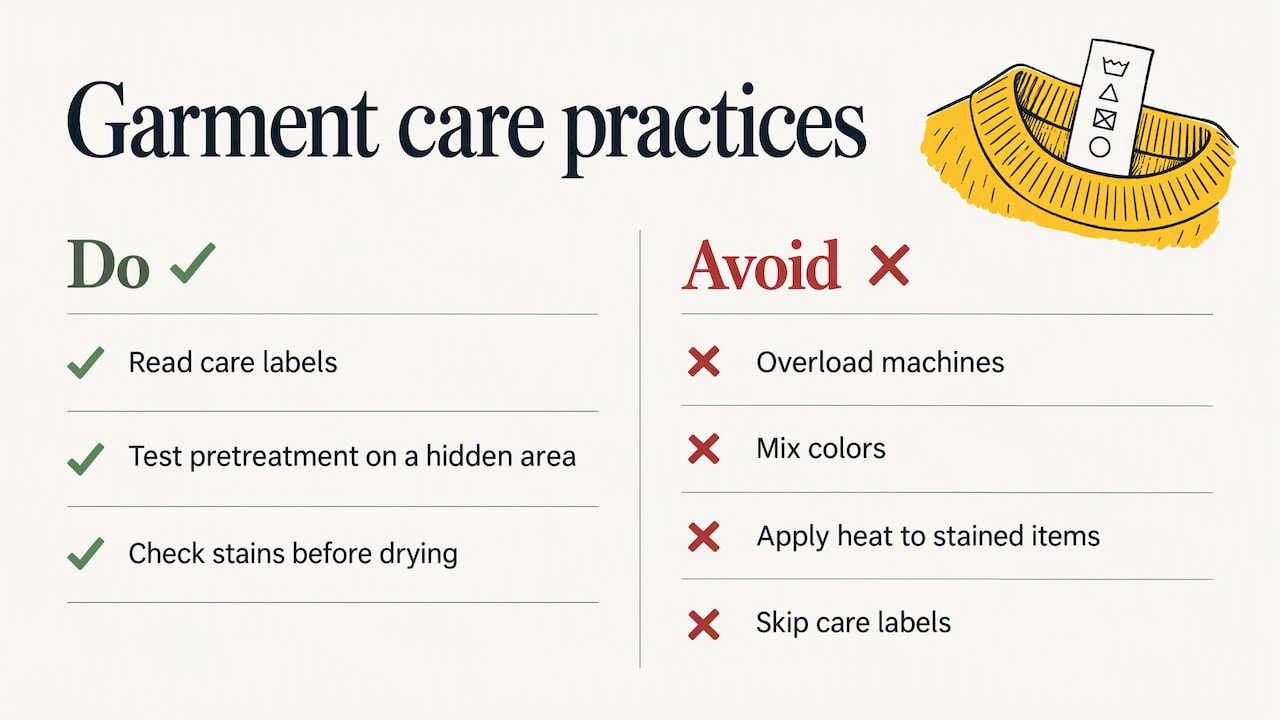
Home laundry goes wrong in predictable ways: overloaded machines, mixed colors, heat on stained items, skipped care labels. The American Cleaning Institute advises reading care labels, testing pretreatment products on a hidden area, and not drying an item until a stain is confirmed gone, because heat can set it. A professional operation does this sorting as routine, every day.
Predictable budgeting
Machine fees at a laundromat or building, detergent, and your own time add up in ways people rarely tally. A flat bag price or a monthly plan turns that into one number.
For businesses: no equipment, less labor
In the hotel trade, CoStar reported that sources cited reduced labor and lower accident liability as benefits of outsourcing, along with less capital tied up in machines. The same logic holds for a gym, a salon or a small restaurant: washers, dryers, water, drainage, repairs and a person to run them all become one invoice.
The tradeoffs to weigh honestly
Outsourcing is not right for every household or every business.
- Cost can exceed doing it yourself. If you have free in-unit machines and spare time, paying per pound may not make sense. CoStar’s report noted that outsourced hotel laundry can cost more and typically needs a larger linen inventory because daily delivery is expensive.
- You depend on someone else’s schedule. A missed pickup or a late return affects you. Dedicated, in-house drivers rather than a rotating gig network reduce that risk, which is how we run pickup and delivery.
- Items leave your sight. Mark anything precious, and ask about claims policies before sending it.
- Fees can hide in the fine print. Delivery charges, minimums, rush fees and per-item surcharges are where cheap-looking offers get expensive. Our guide to free pickup and delivery laundry services shows what to check.
How much does it cost to outsource laundry?
Per-pound pricing is the norm for wash and fold. CNBC reported that U.S. laundry services run around $2 per pound, or $20 to $30 for an average load, and recommends weighing that against your time and your personal hourly rate. Prices in New York vary by borough, speed and provider, so treat that as a national reference point, not a quote.
A quick way to judge it
Take a load that costs $25 outsourced. If doing it yourself takes two hours of sorting, hauling, waiting and folding, you are paying about $12.50 an hour to skip it. If your time is worth more than that, or you simply dislike the chore, outsourcing is a fair trade. If you do four loads a month, multiply: $100 against eight hours.
What changes the price
- Weight or bag size. Per pound, per bag, or flat monthly.
- Turnaround. Same-day and next-day cost more than 48 hours at many providers.
- Pickup and delivery fees and minimums.
- Item type. Dry cleaning is billed per garment. Bulky items are billed per piece.
- Detergent and care requests. Hypoallergenic or fragrance-free handling is sometimes an add-on.
How we price it
Our approach removes the weight math. You pay for a flat-rate laundry bag and pack as much as fits, with no weight limit, and there are no pickup or delivery fees. For regular customers, our subscription packages are priced monthly:
| Plan | Price |
|---|---|
| Bronze | $69 per month |
| Silver | $89 per month |
| Gold | $109 per month |
See what each plan includes on our subscription packages page. Dry cleaning, commercial work and one-off wash and fold orders are quoted on request, so we do not list a price for them here.
How to prepare your first order
A good first order is a test. Ask yourself what you want back and in what condition, then make it easy for the service to deliver it.
- Start with a normal week of clothes. Not your most delicate items. See how the folding, smell and turnaround feel.
- Check care labels. The ACI’s advice to read labels applies before you hand anything over. Set dry-clean-only pieces aside for a dry cleaning order rather than the wash bag.
- Flag stains. Tell the service which items are stained and what caused them. Do not machine-dry stained clothes at home before sending them, since heat can set a stain.
- Empty pockets. Pens, tissues and lip balm ruin whole loads.
- Use two bags at home. One for outgoing laundry and one for clean returns keeps your system simple.
- Write down special instructions. Fragrance-free, cold wash only, no softener, hang dry. Providers can only follow what they know.
- Be there or arrange a handoff. Doorman, front desk or a locked-box arrangement should be confirmed before pickup day.
How to choose a provider
Whether you are in a Manhattan high-rise or a Queens two-family house, the same questions separate a reliable service from a frustrating one.
- Who does the pickups? Employees of the company, or contracted couriers? Dedicated staff tend to mean more consistent windows.
- Is pricing transparent? You should be able to say what a typical order costs before you book, including delivery.
- What detergents do they use? Ask for hypoallergenic options if anyone at home has sensitive skin.
- How long is turnaround, and is same-day possible?
- What happens if something goes wrong? A good provider explains how claims work before you need them.
- Do they handle both laundry and dry cleaning? One provider for both simplifies your week.
For borough-specific reading, we cover Manhattan, Brooklyn and Queens households in separate guides.
Outsourcing laundry for a business
A business decision is bigger than a household one, so it needs more scrutiny. Lodging Magazine reported that operators comparing outsourced and on-premises laundry should look at rental linen versus customer-owned goods, par levels, delivery schedules, separation of each customer’s inventory and capacity for seasonal swings. Those points apply well beyond hotels.
Questions to put to a commercial provider
- Rental or owned goods? Renting towels or linens saves buying stock but adds a recurring fee. Owned goods give you control but need more inventory.
- How many sets do you need? Daily delivery is costly, so less frequent delivery means holding more stock. Work out your par level before you sign.
- What is the delivery schedule, and can it flex? A spa or gym has busy weeks and quiet ones.
- Is your linen kept separate from other customers’? It matters for branded items, medical linens and anything you own.
- Can the provider handle a seasonal spike? Ask what happens in your busiest month.
We serve gyms, salons, restaurants, hotels and healthcare operations with towel rental, towel cleaning, uniform and apparel laundry, medical linen and hotel linen cleaning. Our articles on choosing a towel service and how towel rental changes linen costs go deeper on the numbers.
Our perspective: what 20 years of laundry taught us
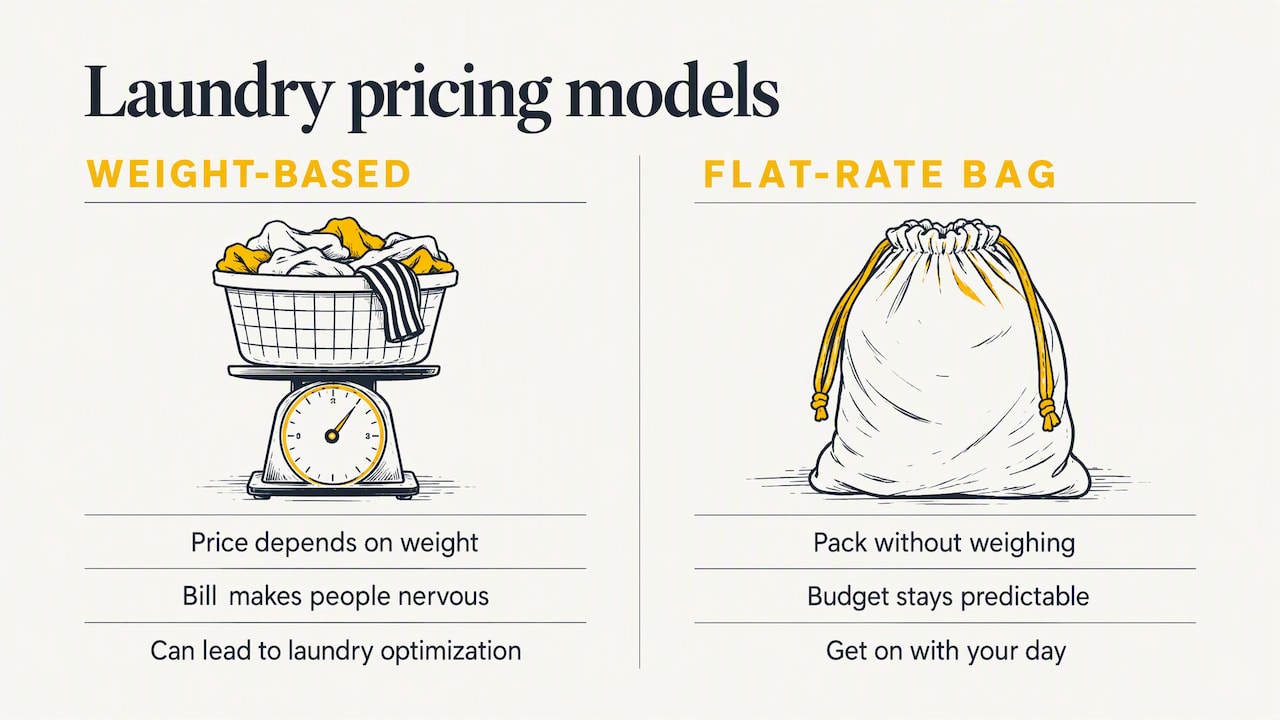
We have spent more than 20 years cleaning New Yorkers’ clothes, and the same pattern repeats. People rarely come to us because they cannot do laundry. They come because the chore has quietly eaten their weekends, and weight-based pricing makes them nervous about the bill.
That is why we built the flat-rate bag. When you pack a bag without weighing it, you stop optimizing the laundry and start getting on with your day. It also keeps the budget predictable, which matters more to most families than the lowest possible price on a single order.
We also believe pickup and delivery only works when the people doing it work for you. Our drivers are our own staff, so the person at your door knows your building and your instructions. We use premium, hypoallergenic detergents on every order because sensitive skin is common and nobody should have to ask twice.
Outsourcing is not for everyone. If you have free machines and spare time, keep going. But if laundry is taking hours you would rather spend elsewhere, handing it over is one of the simplest upgrades available.
— User
Try it with 5 Boro Laundry
If you live or run a business in Manhattan, Brooklyn or Queens, you can book a pickup and see how the flat-rate bag works on a real order. We collect, wash, fold and bring it back with no pickup or delivery fees, and same-day service is available. Start with laundry pickup and delivery in NYC, or choose a monthly plan if you wash every week.
Running a gym, salon, restaurant or hotel? Tell us about your volume on our commercial laundry page and we will set up a schedule that fits.
FAQ
How much should I pay someone to do my laundry once a week?
For a typical household load, national reporting suggests about $20 to $30, or roughly $2 per pound. Multiply by your number of loads per week to get a monthly figure. A flat monthly plan, such as our Bronze plan at $69 per month, can make the cost easier to predict.
Is outsourcing laundry worth it?
It is worth it when the value of your time and the stress saved exceed the price. Compare the cost of a load with what you would earn or what you would rather be doing during the two or more hours it takes. If you have free machines and a light schedule, it may not be.
What can I outsource besides wash and fold?
Dry cleaning, bulky items such as comforters, and for businesses, towels, uniforms and linens. The U.S. Bureau of Labor Statistics lists garments, blankets, draperies, linens and rugs among the items laundry workers process. Ask any provider which of these it accepts.
What is the difference between outsourcing laundry as a household and as a business?
Households buy by the bag, pound or month and care mostly about turnaround and garment care. Businesses also have to consider linen inventory, delivery schedules, capacity during busy seasons and whether linens are rented or owned. Commercial providers typically work under a contract that sets these terms.
Sources
- Laundry and Dry-Cleaning Workers, U.S. Bureau of Labor Statistics
- Cost vs. convenience: When to pay someone else to do your laundry, CNBC
- What to Consider Between In-house, Outsourced Laundry, CoStar
- Should Hoteliers Rent Or Own Hotel Linens?, Lodging Magazine
- Laundry Basics, American Cleaning Institute
- Laundromat Service Tier Pricing Explained for Owners, Kanso Flow