Most dry cleaners return everyday items such as shirts, pants and blouses in one to two days. Suits, formal dresses and specialty pieces take longer, and same-day service exists but depends on the shop, the garment and when you drop it off. Below you will find typical timelines by garment, the reasons a job runs long, how same-day and rush service works, and the questions to ask so you never have to guess when your clothes will be ready.
TL;DR
- Plan on 1 to 2 days for simple garments, a few days to a week for suits and formal wear, and one to two weeks for leather, suede and fur.
- The cleaning cycle itself is short. Most of the wait is inspection, stain treatment, pressing and the queue.
- Drop-off stores that send work to a remote plant add transport time. Cleaners that process on site can move faster.
- Always ask for the exact ready time before you hand the garment over, and ask whether rush service changes the price.
- In New York, pickup and delivery changes the math: you plan around a time window instead of two trips to a counter.
Table of Contents
- How long dry cleaning usually takes
- Why the machine is the fast part
- What makes turnaround longer
- Same-day and rush dry cleaning
- Dry cleaning with pickup and delivery in New York
- Our perspective on turnaround
- How to get a ready time you can trust
- Fast versus careful: what you are really paying for
- Dry cleaning or wash and fold: which is faster?
- Book dry cleaning pickup in New York
- Frequently asked questions
- Sources
How long dry cleaning usually takes
The honest answer is a range, because turnaround depends on what the garment is and how much work comes in. A U.S. consumer guide by textile-care writer Mary Marlowe Leverette says turnaround depends on the garment type and the amount you bring, and advises asking the cleaner for the return-time window before you place an order.
A widely used consumer guide puts simple items like dress shirts and pants at one to two days. The same guide gives the ranges in the table below. Treat them as typical, not guaranteed. Your own cleaner’s promise is the one that counts.
| Garment | Typical turnaround |
|---|---|
| Dress shirts, pants, blouses, knitwear | 1 to 2 days |
| Suits and blazers | 2 to 7 days |
| Formal dresses and gowns | 4 to 7 days |
| Leather, suede and fur | 1 to 2 weeks |
| Drapery and linens | 3 to 7 days |
If you are searching because you have a deadline, the useful reading of that table is this: a shirt or a pair of trousers is a next-day problem, a suit is a plan-ahead problem, and a wedding gown or a leather coat is a plan-weeks-ahead problem.
Why the machine is the fast part
People often assume a long wait means a long cleaning cycle. It does not. Technical guidance from the Canadian Conservation Institute describes solvent cycle times of about 10 minutes for sturdy garments, about 5 minutes for fragile ones, and no more than 2 minutes for very fragile, unstable textiles. That guide was written for museum textiles, but it shows how short the solvent step is.
The time goes to everything around it. According to Good Housekeeping’s explainer, the process includes tagging, inspection and stain pretreatment, solvent cleaning, a second inspection, pressing, ironing or steaming, a final inspection and covering the garment before it goes back to you. Each handoff is a place where a careful shop spends minutes and a rushed shop skips them. We walk through that sequence in our own piece on what happens to your clothes during professional dry cleaning.
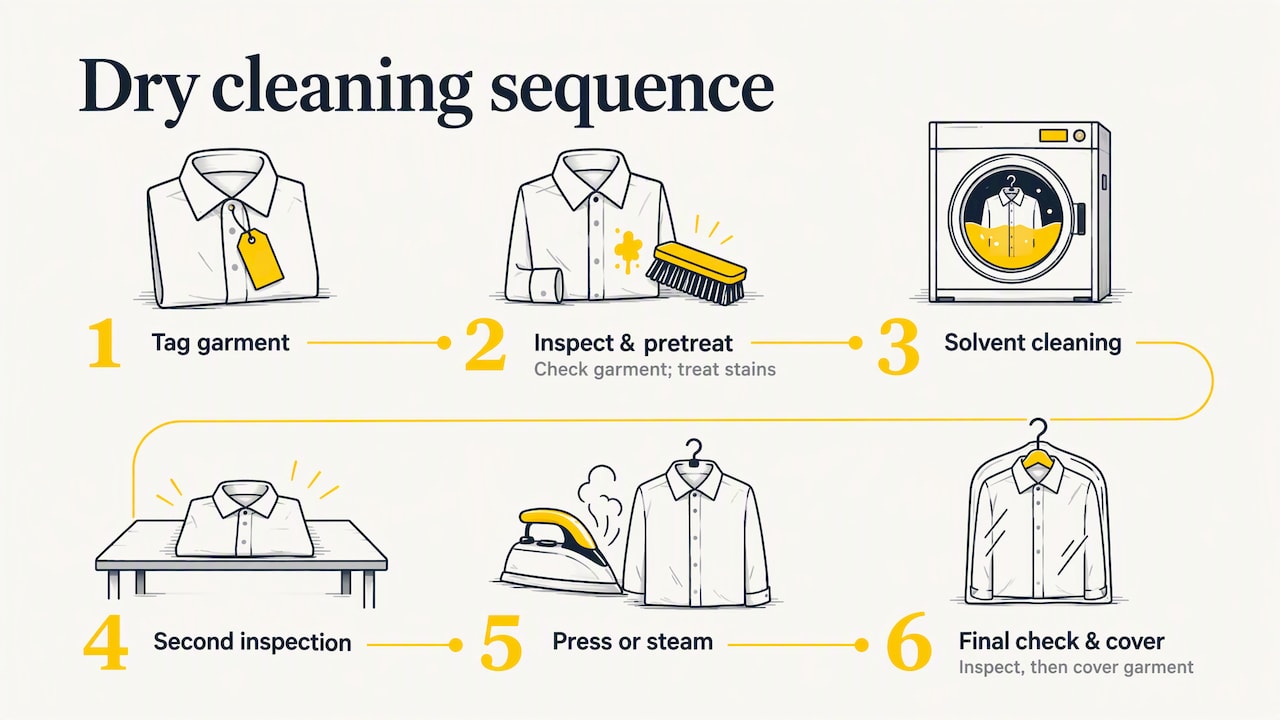
The point for you: a fast turnaround is only worth having if the inspection and finishing steps still happen. Speed that comes from cutting those steps shows up later as a missed stain or a limp collar.
What makes turnaround longer
Several things stretch the timeline beyond the typical range.
The garment’s construction
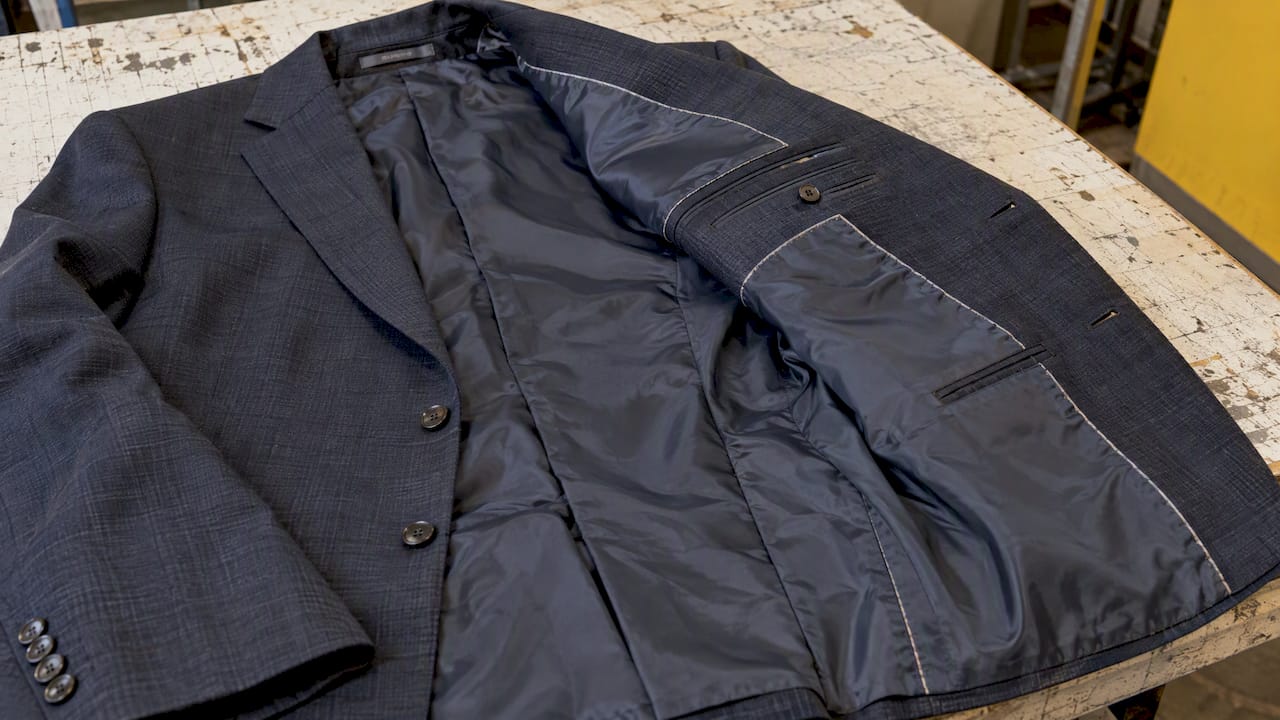
The consumer guide explains that suits take longer because they have multiple pieces, liners and buttons. Formal dresses may need extra time for pleating, beads, lace or other embellishments, and leather, suede and fur use different solvents and handling altogether. Good Housekeeping adds that buttons and embellishments may be protected or removed, then reattached, which is hand work that cannot be hurried.
Stains and special treatment
Pretreatment is tailored to the stain and the fabric. A fresh coffee splash on a cotton shirt is a quick spot. Old wine on silk, a deodorant mark under the arm of a wool jacket or an unknown stain you forgot about months ago takes more time and sometimes a second pass. Tell the cleaner what the stain is and how old it is. It speeds up the work and improves the result.
Where the cleaning actually happens
This is the factor most customers never hear about. The Spruce explains that a drop-off store transports garments to a remote central plant, while a package store cleans them on the premises. A counter that sends everything out adds a truck run in each direction. That is often why one shop quotes next day and another quotes three days for the same shirt.
Volume and timing
Dry cleaners are busiest around Mondays, the weeks before holidays, wedding season and the first cold snap when winter coats come out. A shop that says two days in July may need three in late November. If the date matters, say so when you hand the item over and ask whether the promised day is firm.
Repairs and add-ons
A missing button, a loose hem or a zipper fix adds time, and some cleaners send alterations out to someone else. Mention them at drop-off so the ready date you are given includes them.
Same-day and rush dry cleaning
Same-day dry cleaning is real, but it is a service with conditions. In practice, a shop that offers it will set a morning cutoff, and the item has to be something it can process without special handling. A plain shirt or a pair of slacks qualifies. A beaded gown does not.
Rush service is not new to the pickup-and-delivery model either. American Drycleaner reported in 2016 that an app-based dry cleaning service was advertising a 36-hour turnaround along with same-day or overnight rush service in the markets where it operated. The details have changed since, but it shows that fast return is a standard expectation of convenience services.
Before you rely on a rush promise, ask these four things:
- What is the cutoff time for same-day, and is it for drop-off or for pickup scheduling?
- Is there a rush fee, and is it per garment or per order?
- Does the promise apply to my specific item, or only to basics?
- If the shop runs late, who tells me, and when?
The fee question matters because the answer varies by shop. Some charge a premium for rush, some build same-day into their normal operation, and some quote it item by item. Get the number before you commit, not on the receipt.
Dry cleaning with pickup and delivery in New York
In a city where a trip to the cleaner can eat 40 minutes of a lunch break, turnaround has two parts: how long the garment is being cleaned, and how long it takes to get to and from you. Pickup and delivery removes the second part from your calendar. You hand off the bag at your door and get it back at your door, instead of working around store hours.
There is a trade-off to understand. With a counter shop, you can walk in at 8:30 a.m. and learn the answer face to face. With pickup, you are relying on a scheduled window, so the window and the return day need to be spelled out up front. We cover how scheduling works in how dry clean pick-up and delivery works, and what to expect on a first order in what to expect from your first laundry pick-up appointment.
If you live in Brooklyn, our guides on dry cleaning with pick-up and delivery in Brooklyn and same-day laundry pickup in Brooklyn are the closest match to your block. For the wider picture, see why same-day laundry matters for NYC residents.
Our perspective on turnaround
We have been caring for garments in New York for more than 20 years, and the question we hear most is not “how fast?” but “how sure?” A customer with a suit for Thursday’s meeting would rather have a firm Wednesday than an optimistic Tuesday that slips.
That shapes how we work. Pickup and delivery are handled by our own dedicated, in-house staff, not handed to a third-party courier, so the person who collects your bag belongs to the same team that returns it. We offer same-day turnaround options, and we charge no pickup or delivery fees, so asking for a convenient window never changes your price. We use premium, hypoallergenic detergents on laundry, and we would rather tell you an item needs an extra day than cut the inspection and pressing steps to hit a number.
Our advice, drawn from those years: separate your items by urgency when you book. Put the shirt you need tomorrow in a different request from the winter coat you want back before the first freeze. Tell us about stains and deadlines at booking, not at delivery. And treat any turnaround promise, ours or anyone else’s, as something you can ask to have confirmed in writing.
— User
How to get a ready time you can trust
A vague quote is the real source of most dry cleaning frustration. These habits take two minutes and remove most of the risk.
- Ask for a day and a time, not “a couple of days”. The Spruce guide recommends asking for the return-time window before you place an order. Do it every time.
- Name your deadline. “I need this by Friday morning” lets the shop plan the queue and tell you honestly if it cannot.
- Flag stains and repairs. Say what the stain is and how old it is. Mention loose buttons or hems.
- Split urgent from non-urgent. A single mixed order is only as fast as its slowest piece.
- Ask whether the work is done on site. Cleaning in the same building as the counter generally means fewer transport steps.
- Check the receipt. The ready date should be written on it.
- Build in a buffer for big events. For gowns, wedding attire and leather, start weeks ahead, in line with the one-to-two-week range for specialty pieces.
Fast versus careful: what you are really paying for
Quick service and quality are not opposites, but they do pull against each other when a shop is understaffed or cutting corners. The slow steps are the valuable ones: the first inspection that finds the stain you missed, the pretreatment matched to the fabric, the pressing, the final check. When a turnaround is unusually short, ask what is being skipped, or whether the shop has simply organized its day so those steps fit.
Price follows the same logic. We explain how labor, equipment and finishing add up in the truth about dry cleaning and what you’re really paying for. If your wardrobe includes pieces you cannot replace, how professional dry cleaning protects your most valuable garments is worth a read before you choose speed over care.
Dry cleaning or wash and fold: which is faster?
Not every item you might send to a dry cleaner needs one. Everyday cottons, T-shirts, towels and bedding belong in wash and fold, which is a different workflow with its own timing, often cheaper and easier to batch with the rest of your laundry. Delicate, structured or labeled “dry clean only” pieces such as suits, silk and wool outerwear go to dry cleaning. Our comparison, wash and fold versus dry cleaning, helps you sort a pile in a few minutes, and sorting correctly is itself a turnaround strategy: it keeps simple items out of the slow queue.
Book dry cleaning pickup in New York
If you want dry cleaning that fits a New York schedule, we pick up and deliver across Manhattan, Brooklyn and Queens, with no pickup or delivery fees and same-day turnaround options. Start with our professional dry cleaning service, and tell us your deadline when you book.
If dry cleaning is one part of a weekly routine, our laundry subscription packages cover the rest: Bronze is $69 per month, Silver is $89 per month and Gold is $109 per month. For everyday clothes, our flat-rate laundry bag lets you pack as much as you like without a weight limit, so the cost is predictable. Businesses can see what we offer on our commercial laundry services page.
Frequently asked questions
How long does it usually take for a dry cleaner to return clothes?
For shirts, pants and similar items, one to two days is typical. Suits and formal dresses can take several days to a week, and leather, suede and fur often take one to two weeks. Ask the shop for a specific ready day when you drop off, because volume and on-site versus off-site cleaning change the answer.
Can I get dry cleaning back the same day?
Often yes, for simple garments, if you meet the cutoff. Same-day service usually requires an early drop-off or pickup booking and is not suited to heavily embellished or delicate pieces. Ask about the cutoff, any rush fee and whether your item qualifies before you rely on it. We offer same-day turnaround options in New York with no pickup or delivery fees.
Why isn’t dry cleaning instant if the machine cycle is only minutes?
The solvent cycle is short, roughly 10 minutes for sturdy garments in technical guidance, but the process also includes inspection, stain pretreatment, a second inspection, pressing and a final check. Garments are also queued with other orders. Those steps are what protect the fabric and catch problems before you do.
Does fast dry cleaning cost extra?
It depends on the shop. Some charge a rush fee, per item or per order, and others run same-day as part of their normal operation. Ask for the price and the ready time together, before you hand over the garment.
How can I make sure my dry cleaning is ready when I need it?
Tell the cleaner your deadline, mention stains and repairs, and ask for the ready day and time to be written on the receipt. Keep urgent items separate from the rest of the order, and start weeks ahead for gowns, wedding attire and leather.
Sources
- How to Find the Best Dry Cleaner, The Spruce
- How Long Does Dry Cleaning Take? Turnaround Time Estimates, wikiHow
- How Does Dry Cleaning Work? Experts Explain, Good Housekeeping
- Commercial Dry Cleaning of Museum Textiles, Canadian Conservation Institute
- App-Based Cleanly Expands Service to Washington, D.C., American Drycleaner